Take a look at your garden. Is it more of a random collection of things—a grill over here, a lonely bench over there, a patch of flowers by the fence? It’s a common problem. Many of us have a ‘garden,’ but what we really want is an ‘outdoor living room.’ The secret to transforming that scattered space isn’t about having a green thumb or a bigger budget; it’s a simple shift in thinking you can make today.
The principle that guides the best garden layout ideas is this: stop thinking of your garden as one open space, and start seeing it as a house without a roof. Just like inside your home, a great garden is made of distinct areas with clear purposes—a spot for dining, a corner for quiet reading, a zone for play. Learning how to create garden rooms is the single most powerful tool for making your garden feel intentional and inviting.
This design approach all comes down to three simple elements that define any room, indoors or out: a floor, walls, and a ceiling. Your ‘floor’ might be a patio, deck, or even a clearly defined patch of lawn. The ‘walls’ could be a short hedge, a decorative screen, or a cluster of tall plants. By learning to see and use these three elements, you can turn any part of your garden into your new favourite room.
Start with the ‘Floor’: How to Define Your First Outdoor Room
Now that you’re thinking in terms of “outdoor rooms,” where do you begin? Just like inside your home, you start with the floor. The ground surface you choose is the single most important element for making a small garden more usable because it acts like a welcome mat, signalling “this is a special area.” It visually separates your new “lounge” or “dining nook” from the surrounding lawn or path, instantly creating a sense of purpose and place.
Defining this space doesn’t require a major construction project. In fact, one of the best outdoor living space design ideas is to simply roll out an outdoor rug. This one change can immediately transform a bland patio or deck into a cosy, defined zone. For other simple yet effective floors, consider these options:
- An outdoor rug: The fastest way to define a seating area.
- Interlocking deck tiles: Click them together over concrete or flat ground for an instant wood finish.
- A bed of pea gravel: Perfect for creating a rustic, informal circle for a fire pit.
With a “floor” in place, the area already feels more intentional. But to create that truly cosy, room-like feeling, you need a sense of enclosure.
Create Cosiness: How to Build ‘Walls’ for Privacy and Definition
To get that truly intimate, room-like feeling, you need walls. Think about it: a sofa in a vast, open warehouse doesn’t feel cosy, but the same sofa in a living room does. The ‘walls’ in your garden serve the same purpose. They create a sense of enclosure and psychological comfort, which is the secret to creating privacy in a garden and making a space feel perfect for relaxing or entertaining.
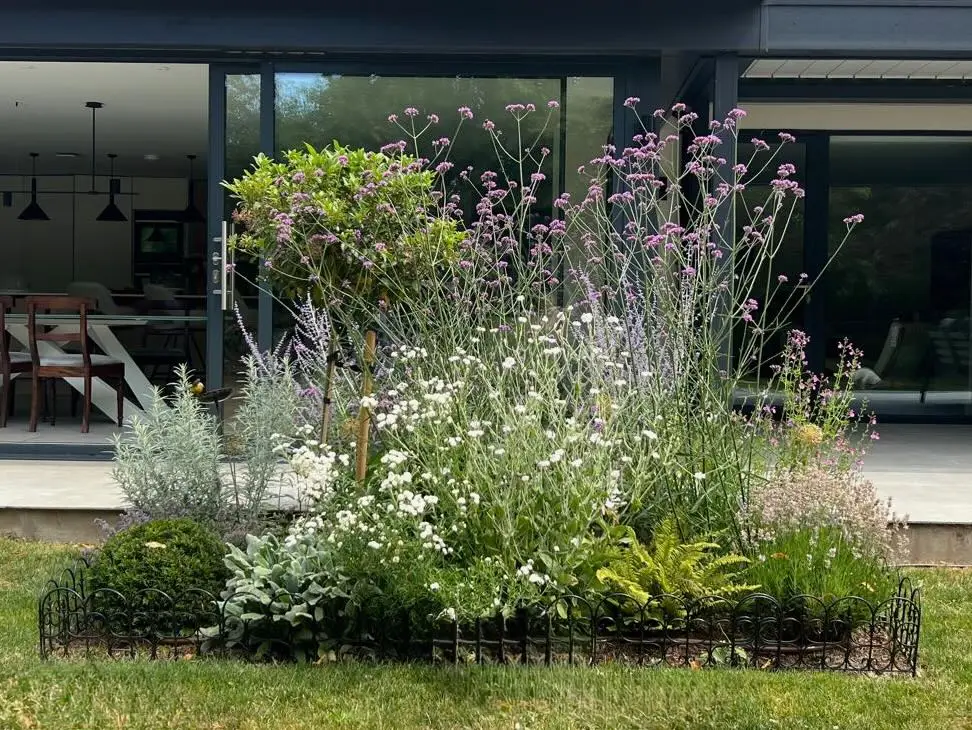
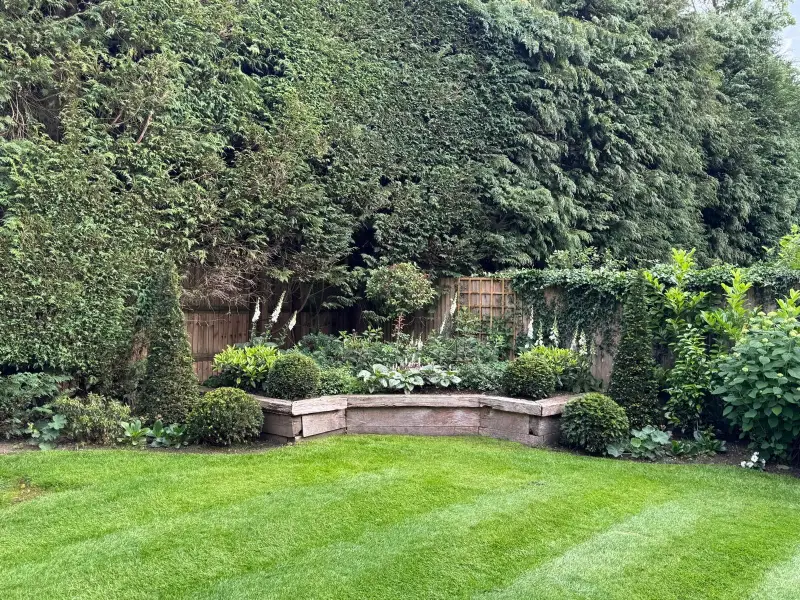
One of the most beautiful ways to do this is by using plants to create garden zones. You don’t need to plant a ten-foot hedge that takes years to grow. Instead, imagine grouping three or four tall planters and filling them with swaying ornamental grass. Instantly, you have a soft, living screen that defines the edge of your patio, filters the view, and adds texture and movement without feeling like a heavy barrier.
For an even quicker fix, or for areas where plants are not an option, simple structures work wonders. A simple wooden trellis, propped against a house or fence, can signal the edge of your ‘room.’ A freestanding decorative screen can be unfolded to immediately section off your seating area from the rest of the garden. These simple vertical elements act as the perfect backdrop, setting the stage for the final, fun part: the furniture and finishing touches.
The Finishing Touches: Add a ‘Ceiling’ and Furniture to Complete Your Room
Your walls are up, creating that crucial sense of enclosure. Now, to truly finish the space, look up. Every indoor room has a ceiling, and your outdoor room can too, creating an intimate retreat from the vast open sky. While a permanent structure like a pergola beautifully defines a space, you don’t need a big construction project. A simple, large patio umbrella or a triangular sail shade stretched overhead instantly creates a sense of shelter and makes the area feel purposefully designed and complete.
Even the suggestion of a ceiling can work magic. A canopy of string lights crisscrossed over your patio does more than just provide a warm glow for evening chats; it visually lowers the ‘sky,’ making the space feel cosier. This simple use of outdoor lighting creates an enchanting atmosphere and extends the usability of your new room well after sunset, all without blocking the stars.
Finally, furnish your room based on its purpose. Just as you wouldn’t put a bed in your kitchen, choose furniture that fits your outdoor room’s function. A small bistro set instantly creates a dining nook, while a pair of deep-seated armchairs signals a lounge made for relaxing. Opting for durable, all-weather furniture ensures your new ‘room’ is always ready for you to step outside and enjoy, bringing the entire concept to life.
Your First Outdoor Room: A Simple 3-Step Weekend Project
Before, your garden was just a garden. Now, you see its hidden potential: a home without a roof, ready for its rooms. You hold the single design secret that powers every great garden makeover.
Let’s build your first room right now. Here is your 3-Step Coffee Corner Plan:
- Choose a spot with morning sun.
- Place one comfortable chair and a small side table.
- Add one large potted plant next to the chair for a ‘wall’ effect.
You’ve just created a destination. This simple act proves the benefits of a zoned garden design and gives you the confidence to create another room, and another. Your garden is no longer just a view from the window—it’s a place waiting for you to step into and live.