Picture a Saturday morning on your patio, coffee in hand, surrounded by flowers buzzing with life. That evening, your garden transforms into a cosy retreat for friends and family. This ideal outdoor space doesn’t happen by accident, but for many, the reality is a frustrating cycle of confusion at the garden centre and watching new plants wilt.
The issue isn’t a lack of effort—it’s the missing ingredient: a cohesive plan. This is where a garden designer changes everything. They aren’t just plant pickers; they are space planners for the outdoors, creating the strategic blueprint that turns a collection of plants into a functional, beautiful living area and finally bridges the gap between a frustrating garden and the oasis you’ve always wanted.
Garden Designer vs. Landscaper: Finally, a Clear Answer
Figuring out who to call can be confusing, but it’s simple when you think of it like building a house. You need an architect for the blueprint before a builder can start construction. The difference between a garden designer and a landscaper follows this exact logic.
To ensure you hire the right pro for the job, here’s how the services break down:
- The Garden Designer: Your architect. They create the vision and detailed blueprint for your entire outdoor space.
- The Landscaper: Your builder. The contractor who physically installs everything—patios, walls, and plants—based on the designer’s plan.
- The Gardener: Your caretaker. This pro provides ongoing maintenance like weeding and pruning to keep the garden thriving long-term.
Knowing this distinction saves you from calling the builder before you have a blueprint. A designer’s first step is to act like a detective, uncovering your garden’s secrets to ensure the final design will work.
The ‘Site Analysis’: How a Designer Uncovers Your Garden’s Secrets
This “detective work” has a professional name: site analysis. It’s the most critical step in the design process. A designer walks your property not just with a tape measure, but with an expert eye, tracking the sun’s daily path, noting where water pools after rain, and observing how the wind moves through the space. They are diagnosing the unique conditions that make your garden different from every other one on the block.
This analysis explains exactly why roses might wilt in a blazing hot spot or why grass fails in a damp corner. Rather than fighting your garden’s natural tendencies, a designer uses this information to choose plants that will naturally thrive, saving you money, effort, and the heartache of watching another plant wither.
Beyond just preventing failure, a skilled designer uses the site analysis to turn your garden’s “problems” into its best features. That soggy area can become a beautiful rain garden, while the deep shade under an old tree becomes the perfect spot for a tranquil woodland path. Every fact uncovered becomes the foundation upon which all creative ideas are built.
What Is a ‘Master Plan’ and Why Does It Matter?
All that detective work from the site analysis feeds into the master plan. This is the complete blueprint for your entire outdoor space, ensuring every element—from the patio’s shape to the location of planting beds—works together in harmony. Instead of a random collection of disconnected projects, your garden becomes one unified, beautiful whole.
A master plan is perfect for a phased installation, allowing you to tackle the project in affordable stages. You might install the patio this year and the garden beds next, knowing each step brings you closer to a cohesive vision, not a chaotic puzzle. This strategic approach makes your dream garden financially manageable and ensures you’re investing wisely to increase your property value.
A Smart Planting Plan: Your Ticket to a Thriving, Four-Season Garden
With the garden’s blueprint set, the designer crafts a detailed planting plan. This isn’t just a shopping list of pretty flowers; it’s a strategy built on the golden rule of “right plant, right place.” By selecting plants that will flourish in your specific sun, shade, and soil conditions, a designer helps you stop wasting money on plants that are doomed from the start.
A great garden shouldn’t look empty the moment summer ends. Designers solve this by creating four-season interest, choosing plants with features beyond fleeting blooms—things like striking winter bark, sculptural seed heads that catch the snow, or colourful evergreen foliage. The result is a dynamic space that feels alive and engaging, even in the middle of January.
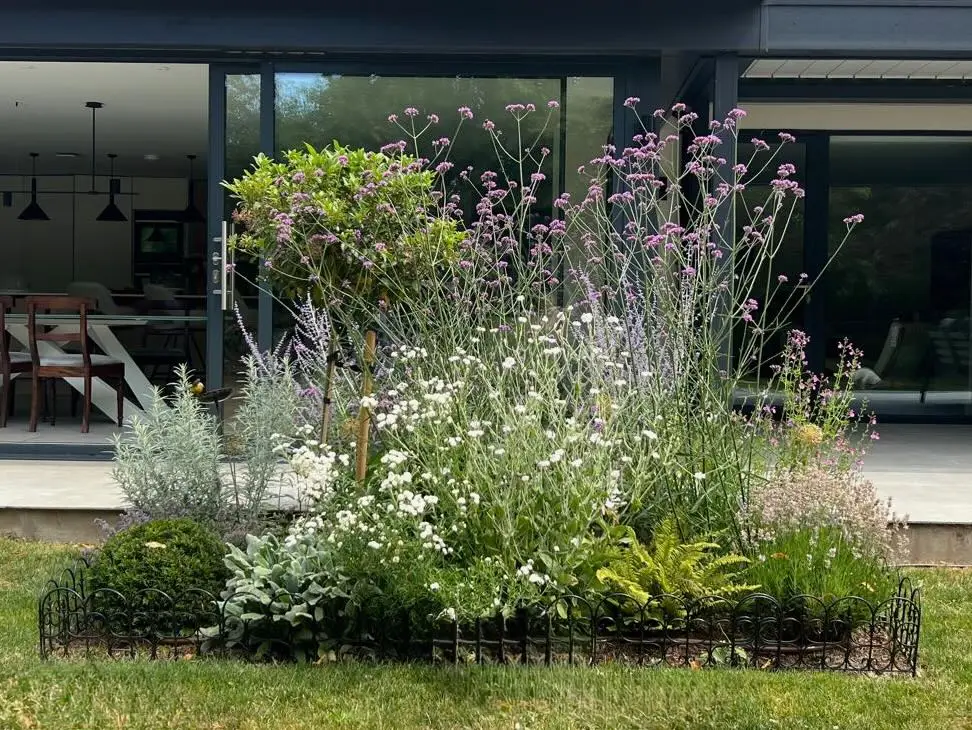
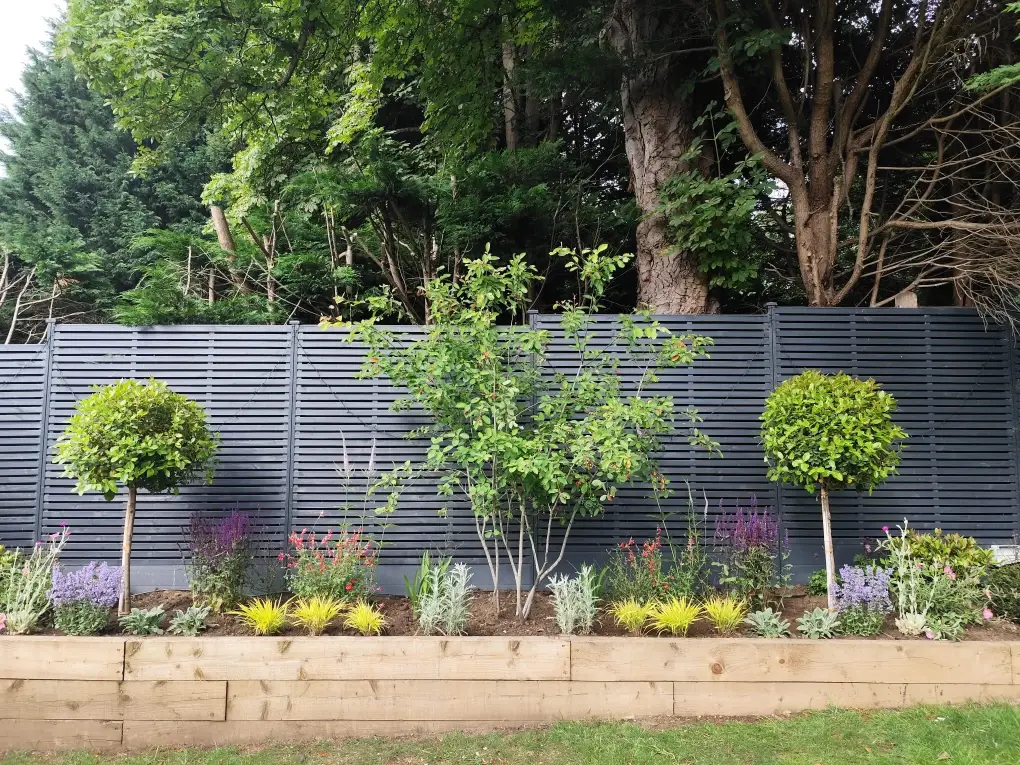
Ultimately, a designer thinks like an artist, using plant shapes and textures to add depth and sophistication. They contrast tall, spiky grasses with soft, mounding shrubs and bold leaves with delicate, feathery ferns. This rich tapestry of plants creates that lush, complete look you see in magazines.
Beyond Flowers: Creating ‘Outdoor Rooms’ with Patios, Paths, and Walls
The beautiful plantings—what designers call softscaping—need a strong framework. This is where hardscaping comes in: the permanent ‘bones’ of your garden. These are the patios, walkways, and walls that provide essential structure, creating the stage for the plants to perform on.
A designer uses these elements to create functional ‘outdoor rooms.’ A well-placed patio becomes a living room under the sky, while a graceful path makes a garden feel more inviting. This is what transforms an empty space into one you can live in, increasing its usability and your home’s value.
Hardscaping can even fix frustrating layouts. For a long, narrow garden, a designer might use a curved path to visually widen the space, leading to a small patio that creates a destination. This thoughtful structure is what makes a garden feel whole and complete.
So, Do You Actually Need a Garden Designer?
If your garden feels like a puzzle with missing pieces, a designer provides the blueprint. This simple checklist can help you decide if it’s the right step for you.
Consider a Designer If…
- You feel overwhelmed and don’t know where to start.
- You have a persistent problem (drainage, a steep slope, poor privacy).
- You’re making a significant investment and want to get it right the first time.
- You want to increase your home’s curb appeal and property value.
Your first step isn’t hiring someone—it’s clarifying your own dream. Start a folder of images you love. This simple act prepares you for a great consultation and begins the powerful shift from “what if” to “what’s next.”