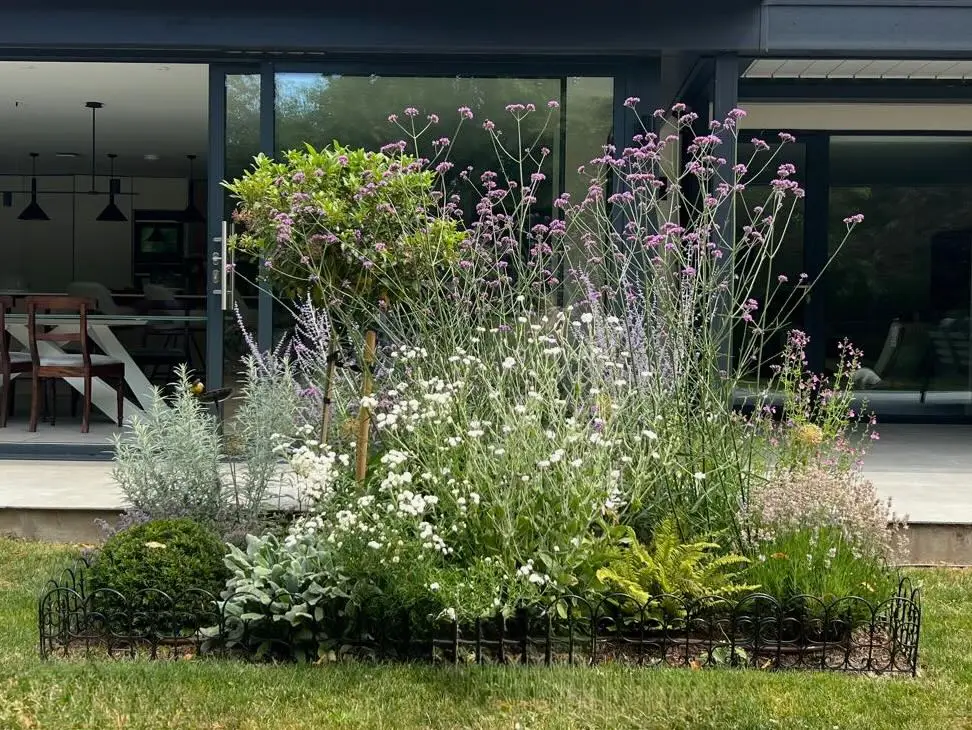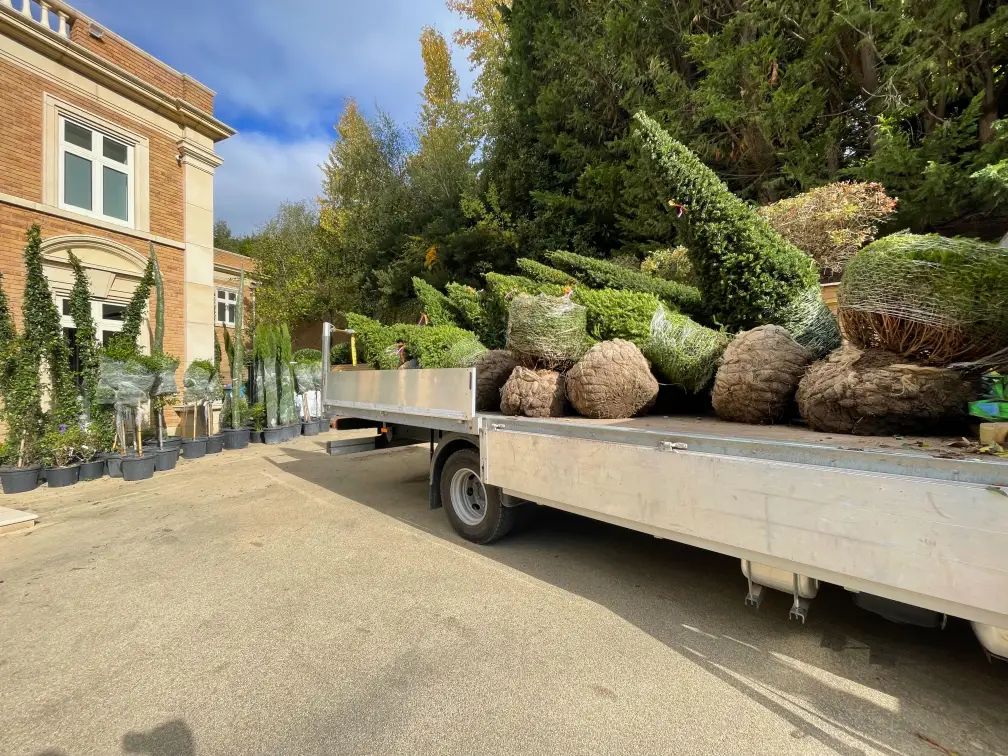
Container planting is one of the simplest ways to bring colour, structure, and seasonal interest to a garden, patio, balcony, or front entrance. For homeowners in Esher, Cobham, Oxshott, Claygate, Weybridge, and Thames Ditton, the best results usually come from choosing low maintenance container plants that suit the position, pot size, and level of care available.
What does low maintenance really mean for container planting?
Low maintenance doesn’t mean no maintenance. In pots and hanging baskets, plants depend on you for water, nutrients, and space, since their roots can’t spread into open soil. Low maintenance container plants are simply plants that cope well with container life, tolerate the chosen position, and don’t need constant deadheading, trimming, or rescuing.
In practical terms, a low maintenance pot should be planned around four things: the right plant for the right place (sun-loving plants for bright patios, shade-tolerant choices for north-facing entrances), large enough containers (bigger pots dry out more slowly), reliable compost and drainage (good peat-free compost with drainage holes reduces stress), and a realistic care routine (even tough plants need watering in dry spells and feeding during active growth).
This matters especially around Surrey, where patios and driveways can get warm and dry in summer, while shaded side returns and older walled gardens stay cool and damp. A plant that looks effortless in one Esher garden may struggle a few streets away if the light and exposure differ.
Reliable low maintenance plants for pots
The best low maintenance container plants often have strong foliage, compact growth, and some tolerance of dry periods once established. They bring shape before flowers, so the display still looks considered even between flowering periods.
Evergreen structure for year-round interest
Evergreen plants are useful in containers because they don’t disappear completely in winter. For front doors, terraces, and formal entrances in places like Oxshott or Weybridge, they give a neat, designed look with relatively little intervention.
Good options include bay (smart, aromatic, suited to larger pots in sheltered spots), box alternatives such as Ilex crenata (useful for clipped structure), skimmia (good for partial shade, with attractive buds), euonymus (tough, variegated, adaptable), and dwarf conifers (useful for texture and winter presence, provided the pot isn’t too small).
These plants still need watering, especially while establishing, but they avoid the short-lived “summer bedding only” effect, ideal where you want pots to look good most of the year rather than starting again each season.
Flowering plants that don’t demand constant attention
For colour, choose plants that flower over a long period without becoming untidy too quickly. Hardy geraniums, salvias, lavender, penstemons, and compact roses can work well in containers when matched to the right aspect.
Lavender and many salvias suit sunny patios in Cobham, Claygate, and Thames Ditton, particularly where a Mediterranean feel suits the space, though they prefer free-draining compost and dislike sitting wet through winter. In shadier spots, heuchera, ferns, hellebores, and skimmia provide softer colour and foliage without needing full sun.
Low maintenance outdoor potted plants full sun
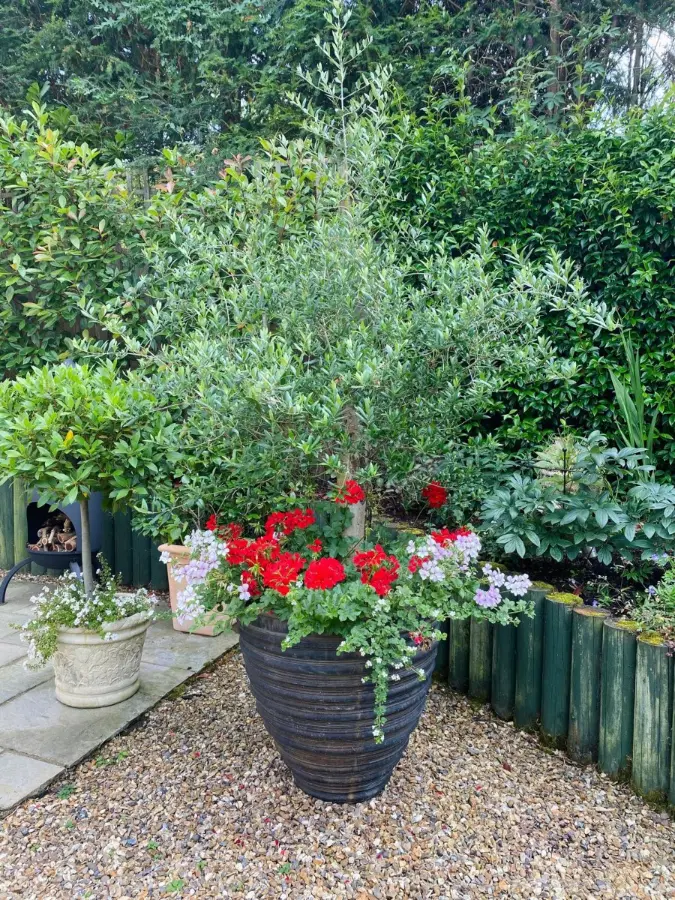
For low maintenance outdoor potted plants full sun, the key is drought tolerance and drainage, since sunny containers dry quickly. Consider lavender for scent and pollinator appeal, rosemary for evergreen foliage and a useful harvest, salvia for long flowering, sedum for fleshy leaves and late-season flowers, agapanthus for bold summer blooms, and olive trees for a sculptural look if winter exposure is considered.
Avoid crowding these with thirsty bedding that needs a different watering routine. A simple combination often performs better than an overfilled pot.
What are the best plants for hanging baskets?
If you’re wondering what are best plants for hanging baskets, start with plants that trail naturally, flower generously, and recover well after watering. Hanging baskets dry out faster than pots on the ground, so the lowest maintenance choices are usually resilient annuals or foliage plants suited to regular, not obsessive, care.
For sunny baskets, good UK choices include trailing pelargoniums, calibrachoa, verbena, bacopa, and trailing petunias. For partial shade, try fuchsia, trailing lobelia, ivy, and begonia. A mix of one central plant, two or three trailing plants, and some foliage is usually easier to manage than a basket packed with too many varieties.
Hanging baskets near front doors in Esher and Thames Ditton can look great, but need practical placement. If exposed to strong afternoon sun or drying winds, they may need frequent watering in warm weather. Where access is awkward, self-watering baskets or fewer, larger displays may make more sense than several small ones.
Why container plants fail
Most container failures aren’t caused by choosing “bad” plants, they happen because the growing conditions don’t match what the plant needs.
Common reasons include too little water (baskets and small pots dry quickly, especially in summer), too much water (blocked drainage holes can cause roots to rot), the wrong aspect (shade plants scorch in full sun, sun lovers weaken in shade), poor compost (exhausted compost can’t support strong growth), overcrowding (too many plants competing for water and nutrients), and neglected winter care (some pots need moving or protecting from cold, wet conditions).
Low maintenance container plants make care easier, but they can’t overcome a badly drained pot, an unsuitable position, or weeks without water in a dry spell.
A simple care routine that keeps pots looking good
Container care works best when it’s steady and seasonal rather than reactive. A few minutes at the right time can prevent a tired-looking display later.
Check moisture before watering by pushing a finger into the compost, water deeply rather than a light sprinkle that only wets the surface, feed regularly during spring and summer for flowering pots, remove tired flowers and leaves to keep displays cleaner, refresh compost when it’s exhausted, and review positions seasonally, moving vulnerable plants away from harsh wind or frost where possible.
For busy households, handing this over can make the biggest difference. Michaela Day Garden Design’s Pots & Planters service helps with choosing the right containers and plants for your space, and for anyone often away from home, the studio’s Holiday Watering service keeps pots properly cared for in your absence, so displays stay looking intentional rather than forgotten.
Seasonal planting for Esher and nearby Surrey homes
Spring containers can include bulbs, violas, primroses, heuchera, and small evergreens, useful near entrances where early colour lifts the approach after winter. Summer is the time for pelargoniums, salvias, lavender, and hanging basket displays, when watering becomes the most important job, particularly for baskets and terracotta pots.
Autumn containers benefit from heathers, cyclamen, grasses, carex, and trailing ivy. Winter pots work best built around structure, evergreen shrubs and hardy foliage rather than delicate plants that dislike cold, wet compost.
The aim isn’t to replace every pot four times a year. A more sustainable approach is keeping a strong permanent framework and refreshing selected seasonal elements when needed.
FAQ
Can I leave pots to look after themselves? Not completely. Even low maintenance plants need watering, feeding, and occasional tidying, since pots restrict root access to moisture and nutrients. Larger containers, suitable plants, and good compost reduce the workload.
Are hanging baskets harder than patio pots? Usually, yes. They dry out faster and hold less compost, so need more regular attention in warm weather. For a lower maintenance display, choose larger baskets, resilient plants, and positions that are easy to reach.
Should I use annuals or perennials in containers? Both can work. Annuals give strong seasonal colour, while perennials and evergreens add longer-term structure. Many low maintenance container plants combine evergreen form with a few seasonal flowering additions.
Bringing it all together
Successful containers aren’t about finding one perfect plant, they’re about matching the plant to the pot, the compost, the light, and the care available. For homeowners in Esher, Cobham, Oxshott, Claygate, Weybridge, and Thames Ditton, well-chosen low maintenance container plants can make entrances, terraces, and garden seating areas feel finished with far less fuss.
If your pots and hanging baskets often start well and then fade, the answer may be better plant selection, a simpler design, or regular help with seasonal care. To discuss container planting, seasonal refreshes, or ongoing support, contact Michaela Day Garden Design.
Get in touch with Michaela Day Garden Design to arrange a free site visit and quote for your pots and planters.