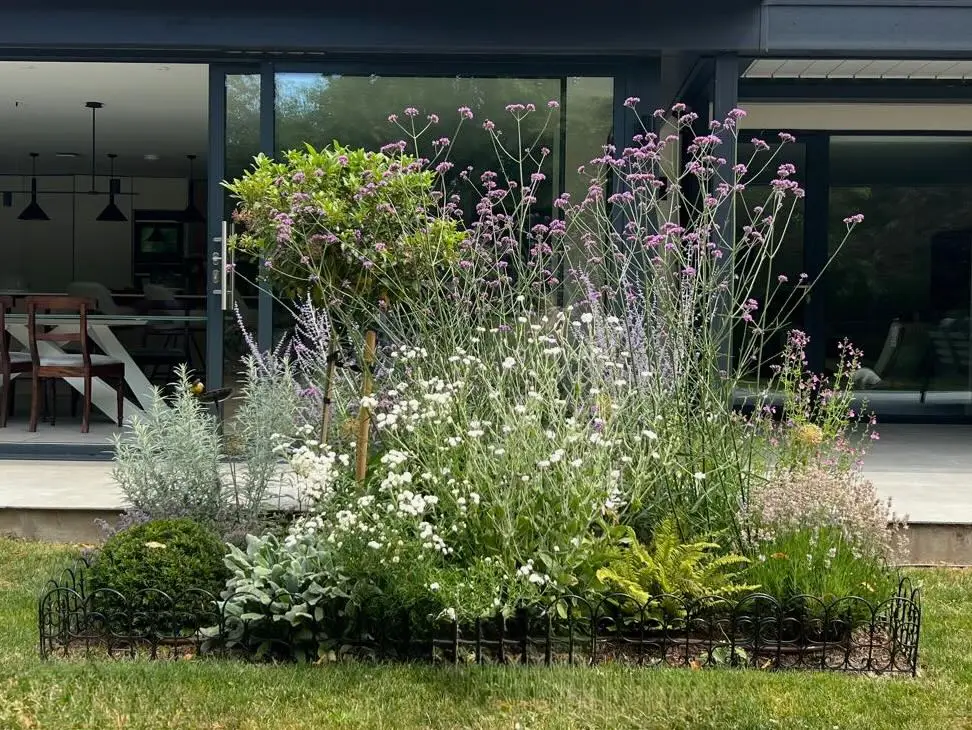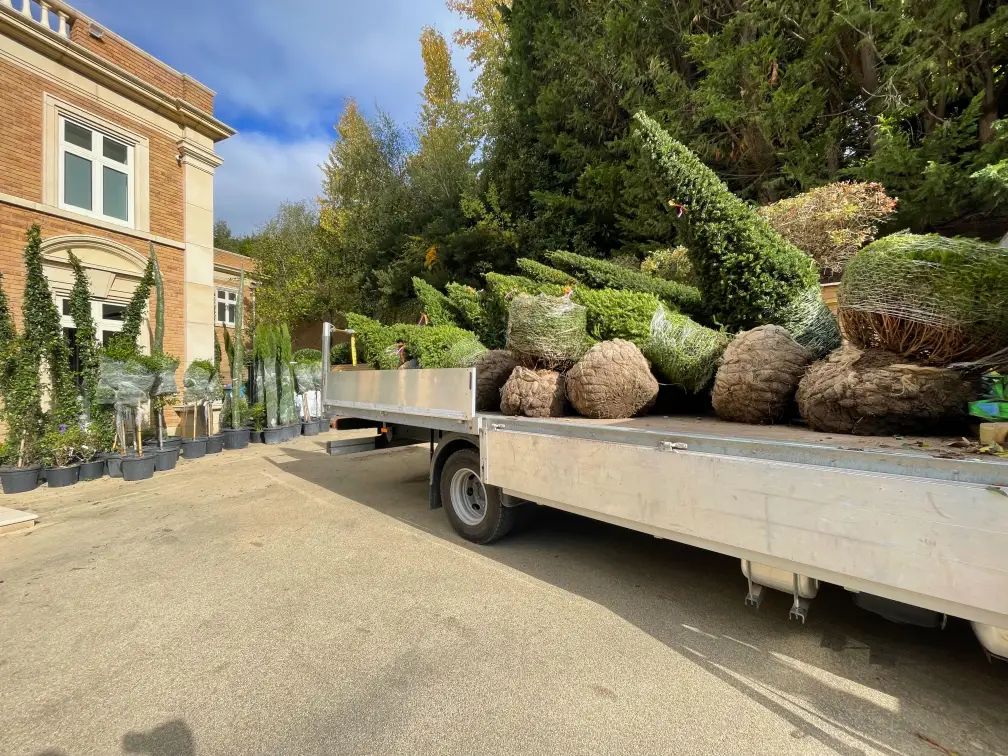

A planting plan is a practical design document setting out which plants go where, how they’ll work together, and how the garden develops through the seasons, considering light, soil, aspect, scale, colour and long-term performance rather than choosing plants one by one at the garden centre.
For gardens in Esher, Cobham, Oxshott, Claygate, Weybridge and Thames Ditton, where outdoor space matters for daily living and property value, this level of planning can be the difference between a border that looks briefly attractive and a garden that feels coherent year after year.
What is a planting plan?
A planting plan is a measured layout showing the selected plants for a garden or border, combining a drawn plan with plant names, quantities, spacing and notes on the intended effect, so the homeowner or contractor can install it accurately.
In good garden design, planting isn’t decoration added at the end. It shapes the mood of the space, softens hard landscaping and helps the garden feel settled. A well-prepared plan also allows for change over time, since plants grow, spread and respond differently to their conditions.
It brings clarity for homeowners, supports a stronger finish for developers, and gives contractors a shared reference point that reduces uncertainty on site.
What a planting plan typically includes
A professional planting plan should be more than a list of attractive plants; it should explain the logic behind the planting.
Plant selection for the site
The first thing to get right is fit: plants need choosing for the garden’s light, soil, exposure and aspect. A sunny border in Weybridge needs a different approach from a shaded boundary in Claygate or a damp corner in Cobham.
A plant that looks perfect in a nursery may struggle in heavy shade or exposed spots, and if part of your garden is shaded by mature trees, this guide to shade plants for borders shows how planting choices should respond.
Positioning for height, structure and seasonal interest
The plan should show how plants are arranged by height and purpose. Taller shrubs add structure or screening, while lower plants edge paths or build a layered foreground, since flat planting at one level tends to lack depth.
Seasonal interest matters too: a border can look full in June but empty in February without planning. Evergreens, seed heads, bulbs and autumn colour can all contribute at different points in the year, keeping shape and texture going rather than one short burst of drama.
A layout others can follow
A planting plan should be clear enough to implement, showing groupings, spacing, quantities and notes on mature size, avoiding overplanting or placing plants where they’ll quickly outgrow their space.
Larger gardens may need the plan split into areas; a single border can stay simpler but still precise. Either way, the value lies in a practical document that turns design thinking into something workable.
Why a planting plan beats impulse buying
Buying plants on impulse often feels enjoyable, but it can leave a garden lacking structure and resilience. A planting plan gives each plant a role, so the garden works as a whole.
The most common problem is mismatched scale: a plant that looks modest in a pot can outgrow a narrow border, while small plants disappear in a deep bed.
Seasonal gaps are another common issue, since many people buy when plants are in flower, weighting the garden towards one season and leaving other times of year thin.
Site mismatch is often the costliest mistake: plants that dislike the soil or moisture level tend to fail slowly, leaving gaps that need replacing, usually more expensive than planning properly from the start.
How planting plans work for different garden styles
Planting plans adapt to formal, contemporary, relaxed or traditional spaces, with the plan controlling how plants relate to each other and the style guiding form, texture and colour.
Cottage garden planting plan
A cottage garden planting plan usually aims for abundance and seasonal richness, but still needs discipline, since cottage-style planting without structure can turn crowded.
The plan might use repeated groups, varied heights and a balance of long-flowering plants, shrubs and climbers, while still allowing for paths and access. Around Esher and Thames Ditton, this can work beautifully where the house style and garden scale support a softer look.
Narrow border planting plan
A narrow border planting plan needs particular care because space is limited. The temptation is to fill it with lots of small plants, which often looks restless. A stronger approach uses fewer plant types, repeated with confidence.
In a narrow border, every plant has to earn its place, with structure and foliage mattering as much as flower colour.
For contemporary or low-maintenance gardens, planting often needs to complement clean lines, where repetition and restrained colour help create calm. Low maintenance doesn’t mean no maintenance, it means planting chosen to cut down on avoidable work.
Who needs a planting plan?
A planting plan suits anyone who wants the garden to look intentional and perform well, whether that’s a whole garden or a single problem border.
You may benefit from one after building work or a house move, since new spaces often feel bare. It’s equally useful for border refreshes, where plants have outgrown their space, letting a careful plan keep what works.
It’s particularly useful where previous planting hasn’t thrived, since repeated gaps or poor growth usually point to a mismatch between planting and site. For anyone who doesn’t need a full redesign, Planting Plans can be a focused way to improve the garden without changing the whole layout.
How planting plans fit into wider garden design
Planting plans often sit within a broader design process, and if the layout, levels or paths are changing, planting should be coordinated with those decisions rather than added afterwards.
In a full design project, planting supports how the garden functions, framing views and softening hard materials, helping a property feel complete and improving the experience of living with it.
Scope affects cost too: a single border plan is very different from a full garden design with construction details and contractor coordination. This article on garden design cost in Esher and Surrey explains how scope influences the investment.
Practical checklist before commissioning a planting plan
Before commissioning a planting plan, it helps to clarify the site and your priorities:
- Light and shade: full sun, partial shade or deep shade.
- Soil and drainage: heavy clay, sandy, dry, damp or improved.
- Views and privacy: what should be screened, framed or opened up.
- Maintenance level: the time and skill you have for upkeep.
- Existing plants: what should stay, move or go.
- Use of the garden: children, pets, entertaining, parking and storage.
- Preferred style: examples you like, while staying open to what suits the site.
- Budget and phasing: all at once, or in stages.
FAQ
Do I need a full garden design or just a planting plan? You may only need a planting plan if the layout works and the planting is the main issue. If paths or levels need changing too, a wider design may suit better.
Can I use a planting plan with my own gardener? Yes. A clear plan can go to your own gardener or contractor, provided they’re comfortable setting out plants, and it gives them direction to keep the result aligned with the design.
How long does a planting plan take to put together? It depends on the size of the area and the level of detail required. A single border is usually quicker than a full garden with several distinct areas.
Does a planting plan cost more than buying plants myself? There’s an upfront design cost, but a plan can cut down on waste and repeated replacement planting, and helps direct spending towards plants that actually suit the site.
Making a better long-term choice for your garden
A good planting plan brings order, resilience and character to a garden, considering how plants will grow and how the garden will look beyond the first season, which matters in established Surrey locations where a well-designed garden supports daily enjoyment and property value alike.
If you’re unsure whether your garden needs a full redesign or a focused planting plan, a site visit is the most practical starting point. Get in touch with Michaela Day Garden Design to arrange a free site visit and discuss a planting plan for your garden.