A well-planted pot can soften a hard corner, frame a doorway, or bring a dull patio to life, often in an afternoon. That’s the quiet strength of container pot gardening: it lets you add colour, height and structure without digging a single border, ideal for smaller or awkward spaces.
For homeowners in Esher, Cobham, Oxshott, Claygate, Weybridge and Thames Ditton, pots are especially useful where planting in the ground isn’t easy: a paved patio with no beds, a shaded courtyard, a small front garden, or a rented home. Get the pot, the planting and the arrangement right, and even a few containers can make a space feel considered and full rather than scattered.
Why container gardening works so well in small spaces
Containers give you control. You choose the soil, position and plant, and can move things around until the display looks right. They bring height to a flat patio, mark the edge of a seating area, or add greenery where there’s no border at all.
They’re flexible over time, too. You can refresh planting seasonally, swap tired plants for fresh ones, or move a pot into better light. For trees, shrubs and larger specimens, containers also keep growth in check, which suits compact courtyards and paved gardens.
Around Esher and the surrounding villages, where many homes have paved patios, walled courtyards or shaded corners, containers often solve a problem that ground planting can’t.
How to choose the right pot
The pot is more than a container: it affects how well your plant grows, how often you’ll water, and how the display looks.
Material
Each material behaves differently:
- Terracotta looks timeless but dries out faster and can crack in frost unless frost-proof
- Glazed ceramic holds moisture better and adds colour, though it’s heavier
- Stone and concrete give weight and a solid, permanent feel, useful for larger plants or exposed spots
- Metal can suit a modern look, but heats up quickly in sun and cools fast in cold
- Plastic and composite are light, affordable and hold moisture well, handy for larger displays or rented spaces
If you fall in love with a decorative pot that isn’t frost-proof or well-drained, use it as an outer cover and slip a plainer planter inside.
Size
Size matters more than people expect. Small pots dry out quickly, restrict roots and often disappoint. As a rule, bigger pots are more forgiving: they hold more compost, stay moist longer and give roots room. For shrubs or small trees, choose a container with genuine depth and width.
Drainage
Drainage is non-negotiable. Without holes, water collects at the base and roots rot. Every pot needs drainage holes, and standing pots on small feet or bricks helps water escape and stops waterlogging.
How to plant a pot properly
Good planting gives your display the best possible start.
Start with drainage. A shallow layer of crocks or broken pot pieces over the holes helps water flow while keeping compost in.
Use the right compost. A good peat-free multipurpose compost suits most displays. For long-term planting like shrubs or trees, a loam-based compost holds structure and nutrients for longer, and mixing in slow-release feed at planting time supports steady growth.
Mind spacing. It’s tempting to cram a pot for instant impact, but plants need room to grow. A balanced container often follows the “thriller, filler, spiller” idea: a taller centrepiece, mid-height plants around it, and trailing plants to soften the edges.
Firm and water in. Once planted, firm the compost gently and water thoroughly to settle everything and remove air pockets. Gently loosen circling roots on pot-bound plants before planting, so they establish more readily.
Container plants for shade: turning a problem into a feature
Shaded patios and courtyards are where containers really earn their place. If a corner never sees much sun, fill a pot with shade-tolerant planting and place it exactly where you want, something ground planting under trees or walls rarely allows.
A container shade garden can be lush and textured rather than sparse. Good container plants for shade include:
- Ferns for soft, woodland texture
- Hostas for bold leaves, where slugs can be managed
- Heuchera for year-round coloured foliage
- Hydrangeas suited to pots, for summer flowers in partial shade
- Skimmia or sarcococca for evergreen structure and winter interest
- Bulbs such as snowdrops and cyclamen for seasonal detail
Flowering may be more restrained in deep shade, so leaves often do most of the work. Contrasting foliage shapes and pale or variegated leaves lift a shaded corner and make it feel intentional.
For a shaded courtyard in a period property, a cluster of pots with ferns, evergreens and a few seasonal flowers can turn an overlooked corner into a calming focal point.
How to arrange garden pots for real impact
Arrangement is what separates a scattered collection from a considered display. A few principles help.
Group in odd numbers. Threes and fives usually look more natural than pairs. Cluster pots of different heights together so they read as one arrangement.
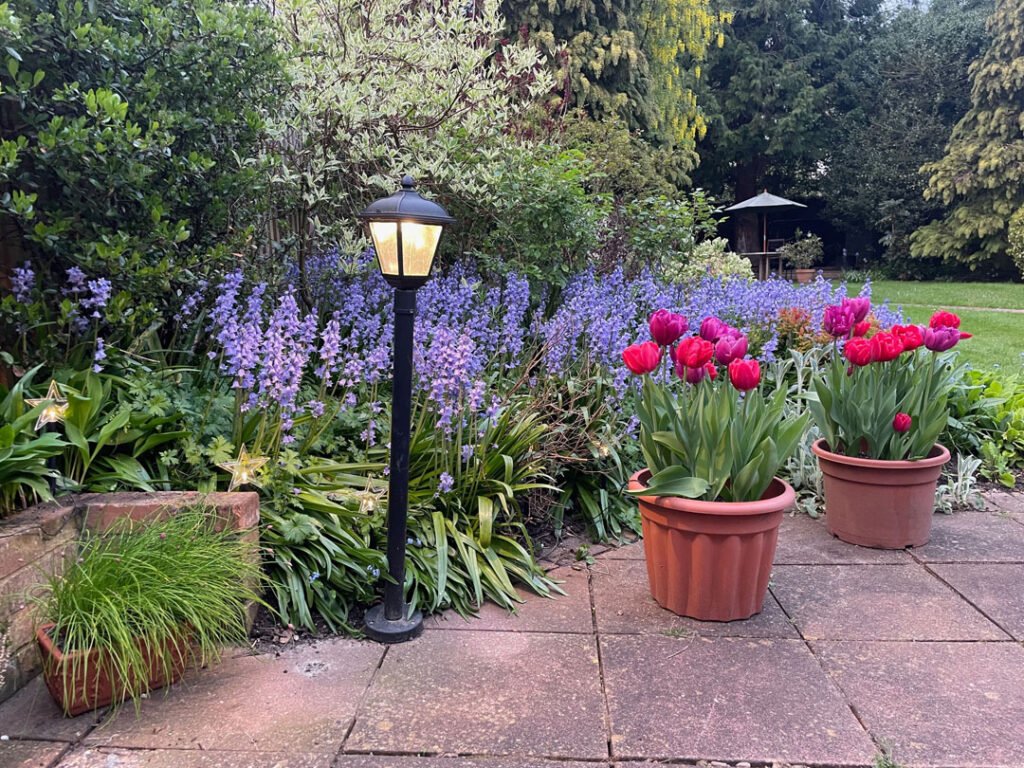
Vary height and texture. Combine tall, upright pots with lower, rounded ones. On a paved patio, a tall cylindrical planter beside two shorter bowls instantly adds structure. Use plant stands, upturned pots or steps to lift smaller containers.
Use pots with purpose. Try matching planters either side of a door, a rhythm of pots along steps, or a group softening the corner of a seating area. In a small front garden, a pair of planters at the entrance adds a warm, welcoming touch.
Repeat for cohesion. Repeating a pot colour, material or key plant ties a scheme together, especially where space is tight. A calm, repeated palette usually looks better than one of everything.
Caring for container plants
Containers need a little more attention than borders, mainly because they rely on you for water and nutrients.
Watering. Pots dry out faster than borders, especially in summer or windy spots. Check regularly and water thoroughly rather than little and often. If a plant dries out very badly, standing the pot in water for a while can help it recover.
Feeding. Nutrients wash out of containers over time. A liquid feed through the growing season, or slow-release granules, keeps plants healthy and flowering.
Repotting. Plants outgrow pots. If roots appear through the holes, growth slows, or the compost dries almost instantly, it’s time to pot on into something larger or refresh the compost.
FAQ
How often should container plants be watered?
It depends on pot size, plant, weather and position. In summer, some pots need daily watering; in cooler months, far less. Check the top few centimetres of compost and water when it feels dry.
Can I use the same pot all year round?
Yes, especially with evergreens or a permanent shrub. Many gardeners keep a structural base planting and swap in seasonal colour around it through the year.
What’s the best pot size for a small patio?
A mix works best: one or two larger statement pots for impact, plus smaller ones grouped around them. Larger pots are more forgiving and dry out more slowly, so avoid going too small.
Do I need special compost for pots?
A good peat-free multipurpose compost suits most displays, while loam-based compost is better for long-term shrubs and trees. Fresh compost matters more than reused soil from the garden.
Bringing it all together
Container pot gardening is one of the simplest ways to transform a patio, courtyard or small garden without a full redesign. With the right pots, proper planting and a considered arrangement, even a handful of containers can make a space feel finished, whether a sunny terrace or a shaded courtyard.
The best results come from matching pots and plants to your space, light and lifestyle. Michaela Day Garden Design is an Esher-based studio offering a Pots & Planters service, with expert advice on choosing pots and planters tailored to your space, plant needs and aesthetic preferences. This is especially helpful for shaded areas, awkward corners, or a display you want to feel truly designed.
Whether you need a container shade garden for a north-facing courtyard or a welcoming arrangement by your front door, thoughtful container planting brings any space to life. Get in touch with Michaela Day Garden Design to arrange a free site visit and quote for your pots and planters.