A shaded border can be one of the most atmospheric parts of a garden: cool, textured and quietly full of life. In Esher and the surrounding Surrey villages, shade is common in north-facing gardens, plots beneath trees, walled courtyards and boundaries beside neighbouring buildings. The secret is choosing the right shade plants for borders and arranging them in layers, so the planting feels intentional rather than sparse.
For homeowners in Esher, Cobham, Oxshott, Claygate, Weybridge and Thames Ditton, shade isn’t a limitation. It’s an invitation to design with foliage, structure and seasonal detail.
Understanding the type of shade in your garden
Before choosing plants, observe the shade itself. Not all shade is the same, and a plant that thrives in one border may struggle in another.
North-facing and dappled shade
North-facing borders get little direct sun, especially in winter, staying cool with slower-drying soil, which suits dependable evergreens, woodland perennials, ferns and strong foliage shrubs. Dappled shade beneath tree canopies is often plant-friendly, though tree roots compete for water, so plant choice and soil improvement matter.
Dry and damp shade
Dry shade, common beneath mature trees or at the base of hedges and walls, needs plants that tolerate low light and limited moisture; mulching and careful watering while they settle in helps. Damp shade, in enclosed or lower-lying areas, suits many lush foliage plants, though the aim is moisture-retentive soil, not stagnant ground.
Courtyard and walled shade
In walled courtyards, shade can be compounded by reflected cold, limited airflow or dryness near masonry. These spaces suit bold evergreen border bushes, climbers, pots and plants with leaf texture you can appreciate close-up.
The best shade plants for borders: a layered palette
Successful shady borders combine structure, mid-level planting, groundcover, seasonal flowers and bulbs, creating depth that keeps the border composed all year. Think about what each plant contributes: shape, height, texture, colour or season.
Start with structure: evergreen border bushes
Evergreen shrubs are the backbone of a shade border, giving form in winter, a calm background for perennials, and stopping shaded areas looking bare outside the growing season. Good evergreen border bushes for shaded Surrey gardens include:
- Sarcococca (sweet box), glossy leaves and scented winter flowers
- Skimmia, compact structure with winter buds and spring flowers in sheltered shade
- Fatsia japonica, a strong shape-maker for sheltered positions, with large glossy leaves
- Mahonia, for winter flowers, evergreen presence and a woodland character
These shrubs don’t all suit every site, so the choice depends on soil, exposure, space and winter structure. In a narrow border, one or two may be enough; in a deeper boundary, repeat them for a settled, designed feel.
Add texture with ferns and foliage plants
Foliage is the quiet magic of shade planting: in sun, flowers lead, but in shade, leaves do the work. Consider combining:
- Dryopteris for robust, graceful fern texture
- Hart’s tongue fern for glossy, strap-shaped leaves
- Brunnera for heart-shaped leaves and spring flowers
- Heuchera for coloured foliage in burgundy, lime, caramel or silver
Bring in seasonal flowers without forcing colour
Shady borders can be full of flowers, though the palette is softer. Whites, creams, pale blues, lilacs and soft pinks glow beautifully in lower light. For seasonal interest, consider:
- Hellebores for late winter and early spring flowers
- Epimedium for delicate spring blooms and good foliage
- Astrantia for relaxed summer flowers in partial shade
- Foxgloves for height and a natural woodland feel
Bulbs help too: snowdrops, narcissi, cyclamen and bluebells work well beneath deciduous trees, where spring light reaches the ground before the canopy closes.
Use groundcover to make the border feel full
Bare soil is often what makes a shady border look unfinished. Groundcover plants knit the scheme together, suppress weeds and create a lush, layered look:
- Pachysandra terminalis for evergreen coverage in shade
- Vinca minor for low, spreading foliage and spring flowers, where it has room
- Ajuga for low mats of foliage and blue flower spikes
- Liriope muscari for grassy evergreen leaves and late flower spikes
Choose groundcover with care: some spread more than others, which helps in larger borders but can overwhelm small courtyards.
How to layer shady border plants for a considered look
Layering turns a collection of plants into a designed border, with a gentle progression from back to front and repeated forms leading the eye through the space.
Structure at the back, groundcover at the front
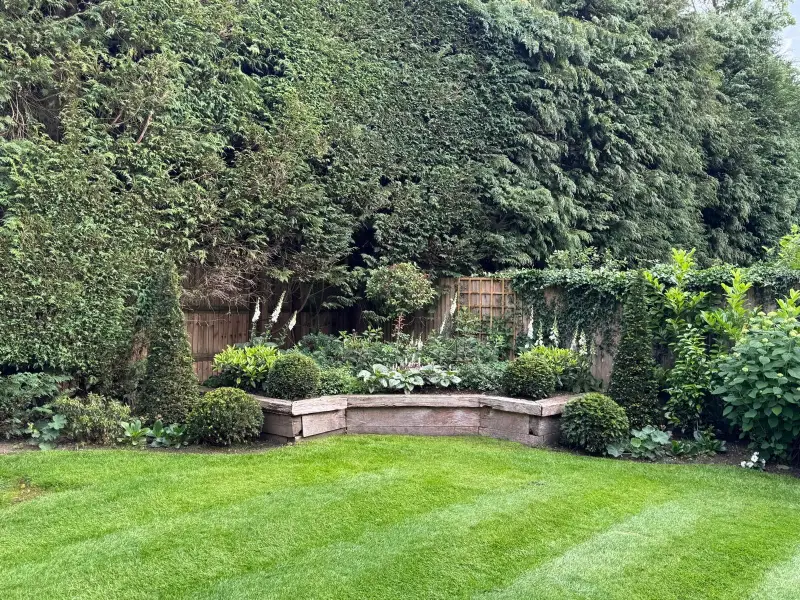
Begin with the tallest structure: shrubs, small trees or existing mature planting, set towards the back of a boundary or anchoring a courtyard. Build the middle layer with ferns, hellebores, heucheras, brunnera and compact shrubs, which soften the structure and carry most of the visual richness. Finish at the front with groundcovers, small ferns and spring bulbs, letting them spill slightly rather than clipping them into a rigid edge.
Repeat plants, and plan for winter
Repetition brings calm, so rather than one of everything, repeat a few reliable plants in groups, especially in long, narrow borders. And because a border of only herbaceous perennials can look thin in winter, evergreen shrubs and ferns, winter-flowering plants and strong stems keep structure through the colder months.
Designing shade borders in Esher and nearby Surrey gardens
Local context matters. Many gardens around Esher, Cobham, Oxshott, Claygate, Weybridge and Thames Ditton have mature trees, established hedges, clay-influenced soils and changing patterns of shade, so a scheme that suits a sheltered courtyard may not suit a root-filled border beneath trees. That’s why site analysis matters: light levels, soil texture, drainage, root competition, aspect and the style of the house all shape the right plant choices.
Michaela Day Garden Design is an Esher-based garden design studio. Through its Design & Planting and Shade Planting services, it provides detailed site analysis and tailored planting, helping shaded gardens become layered and elegant rather than difficult corners to disguise.
Common mistakes in shaded border design
Even experienced gardeners find shade challenging. Avoiding a few mistakes helps from the start.
Choosing only flowering plants: flowers are lovely, but foliage carries a shade garden. Without varied leaf shapes, evergreen structure and groundcover, the border looks flat once flowers fade.
Ignoring soil moisture: shade doesn’t automatically mean damp. A border beneath trees may be very dry, while a walled corner stays moist, so match plants to both light and moisture.
Planting too sparsely: shade borders look best planted generously. Spaced too far apart, the scheme feels patchy and weeds move in, so allow room for growth but plan for coverage.
Forgetting about winter: many shady areas are most visible from the house in winter, so evergreen border bushes, winter scent and strong foliage make these views much more appealing.
Fighting the conditions: forcing sun-loving plants into shade usually disappoints. Better to embrace the quieter beauty of shade plants and design around their strengths.
FAQ
What are the best plants for a shaded border?
It depends on the type of shade and soil. As a general palette, consider evergreen shrubs such as sarcococca, skimmia, fatsia and mahonia, with ferns, hellebores, brunnera, heuchera and groundcover.
Can a north-facing border still look colourful?
Yes, although the colour is often more subtle. Pale flowers, silvered foliage, variegated leaves and glossy evergreens all brighten a north-facing border, and texture matters as much as colour.
What evergreen shrubs work in shade?
Several work well, including sarcococca, skimmia, aucuba, fatsia, mahonia and some daphnes. The right choice depends on space, shelter, soil and how much dryness the plant faces.
How do I make a shady border look fuller?
Use layers: structural shrubs first, ferns and perennials in the middle, then groundcover and bulbs at the front. Repeating plants in groups makes the border feel more generous.
Are shady border plants low maintenance?
They can be, if chosen well for the site. Many are long-lived once established, but they still need soil preparation, watering while settling in, mulching and occasional tidying.
A graceful shade border, by design
A beautiful shade border isn’t about compromise. It’s about noticing what the garden already offers and choosing plants that thrive there. With the right mix of evergreen structure, layered foliage, seasonal flowers and groundcover, even the shadiest boundary can become one of the garden’s most graceful parts.
Get in touch with Michaela Day Garden Design to arrange a free site visit and quote